
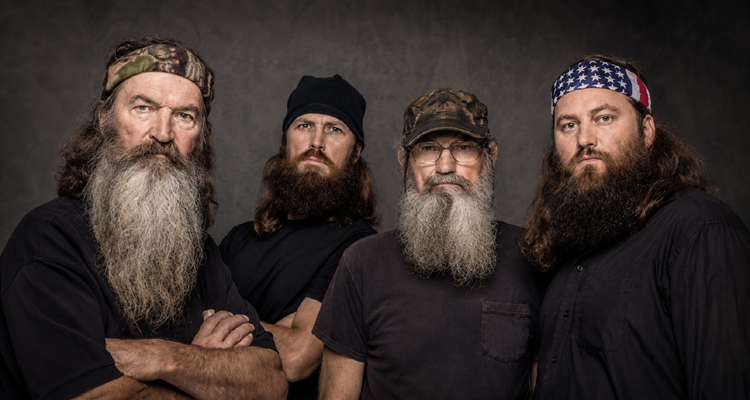
Cracker Barrel, Duck Dynasty is your customer.
I do not mean that the Robertson family occasionally stops by for biscuits and gravy. Although, statistically speaking, at least one of them probably has.
I mean the people who watch Duck Dynasty are largely the same people who walk through Cracker Barrel’s doors, sit in its rocking chairs and somehow leave with old-fashioned candy, a peg game and a decorative rooster they did not know they needed.
This should not require advanced market research.
Yet Cracker Barrel is removing selected Duck Dynasty products from its stores following the controversy surrounding Phil Robertson’s comments in GQ.
The company says it has removed products that “might offend some of our guests” while continuing to carry other Duck Commander merchandise.
In other words, Cracker Barrel is attempting to remove enough merchandise to satisfy one group without removing enough to alienate another.
Whether that will work is another question.
This Is a Branding Question
This is not an argument about whether Robertson’s comments are right or wrong.
Plenty of people are already having that argument, often in all caps.
This is about brands, culture, marketing and demographics.
Companies should understand their customers. They should know what those customers value, what they buy and why they choose one business over another.
Cracker Barrel has spent years developing a specific identity. Its restaurants are built around Southern food, rural nostalgia, front porches, country music, rocking chairs and an old general store.
Duck Dynasty is built around a Southern family, a hunting business, rural culture, family meals and open expressions of Christian faith.
You do not need a Venn diagram to find the overlap.
The circles are practically sitting on top of each other, wearing camouflage.
Understanding the Customer You Already Have
Duck Dynasty is not an obscure television program Cracker Barrel discovered in a forgotten corner of cable.
The show’s fourth-season premiere attracted 11.8 million viewers. Meanwhile, industry estimates place 2013 sales of Duck Dynasty-related merchandise at approximately $400 million.
Those numbers do not tell us whether Robertson is right or wrong.
They do tell us that the show has an enormous and commercially active audience.
More importantly, it is an audience that appears to fit naturally within Cracker Barrel’s existing brand.
A company does not have to agree with every statement made by every person whose face appears on a product it sells.
It also does not have to ignore customers who genuinely find those statements offensive.
However, before reacting to a controversy, a company should ask a basic question: Who is our customer?
Not the hypothetical customer discussed in a conference room. Not the customer a consultant says the company might attract someday.
The actual customer.
The one currently eating hash brown casserole beneath an antique farm tool.
When Pleasing People Becomes Impossible
Cracker Barrel says its mission is “Pleasing People.” That sounds pleasant until people disagree.
At that point, pleasing everyone becomes impossible.
Any decision will communicate something, even when the company tries very hard not to communicate anything at all.
Removing every Duck Commander product would send one message. Keeping every product would send another. Removing only selected products creates its own set of questions.
Which products became offensive?
Is the concern Robertson’s face, his name or the larger brand surrounding him? Does a coffee mug carry the same meaning as an interview?
These are not sarcastic questions. They reveal how difficult it becomes to separate a product from the people, culture and associations attached to it.
That is why companies should understand their own identity before a controversy begins.
A brand cannot base every decision on the loudest voices currently speaking. It also cannot assume that silence means customers do not care.
The challenge is not simply deciding whom to offend.
It is understanding what the company has promised its customers, intentionally or otherwise, through years of branding.
The Larger Lesson for Brands
Cracker Barrel has every right to decide which products it sells.
Customers have every right to decide where they eat, shop and spend their money.
The more interesting question is whether Cracker Barrel fully understands the cultural relationship between its brand and the audience surrounding Duck Dynasty.
This is not about requiring a company to endorse every belief held by its customers.
It is about recognizing that brands do not exist in a cultural vacuum.
The imagery, language, products and experiences a company chooses will attract certain people and create certain expectations.
When controversy arrives, those expectations do not disappear simply because the marketing department would prefer a cleaner set of options.
Cracker Barrel may conclude that removing the merchandise is the right decision. It may conclude otherwise.
Either way, the company should understand that the customer affected by the decision is not standing somewhere outside the building.
He is already inside and waiting for his biscuits and apple butter.