
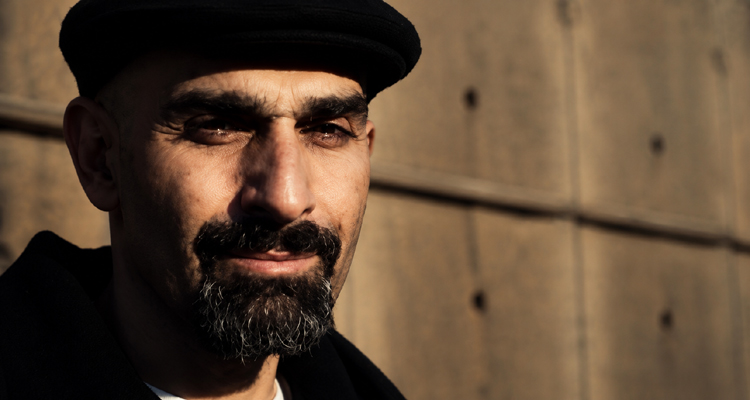
Fat Beats is a hip-hop institution. If you don’t know that, first go punch yourself in the face. Then come back and read this interview.
I initially met Joseph Abajian through our mutual partnership at the time with Koch Entertainment. Fat Beats had a distribution deal with Koch as a record label. It also handled account purchasing for its brick-and-mortar stores and operated a one-stop distribution network supplying niche retailers around the world.
Beyond that, we did business together on various levels and eventually connected on LinkedIn. At the time, I noticed that his profile listed a seminary under education.
My interest was piqued, so I reached out to ask about his time at seminary. I found out that we had much more in common than a love for hip-hop, but I’ll let him tell you about that himself.
Please introduce yourself.
My name is Joseph Abajian, or DJ Jab. I’m the founder and owner of Fat Beats.
Before I launch into my full-blown, no-holds-barred, comprehensive interrogation, is there anything specific you want readers to know?
Being that your audience is my audience, too, I wanted to compare the hip-hop community to what it is today. Rap, gangster life and all these things that aren’t hip-hop have kind of taken over hip-hop and called themselves hip-hop.
To me, it’s very similar to the faith. If you ask the bulk of America, people say they’re Christian, but they don’t practice Christian beliefs or really follow Christian ways.
Just like with hip-hop, everyone says they are hip-hop but doesn’t do anything to participate in the hip-hop community. They’re really just hijacking the name, like much of America has done with the faith.
So, specifically regarding Christian hip-hop, you think there are many people who call themselves hip-hop to reach people, but outside of that, hip-hop was never really part of their lives?
They claim the name. They say, “I’m hip-hop,” but they don’t study the history of what hip-hop really is.
Hip-hop isn’t thugged-out life, a ridiculous number of tattoos or wearing your pants in a way that makes you look foolish. That’s not hip-hop. That’s a rap persona people put on, and then they say, “I’m hip-hop.”
Then you say, “OK, let’s see what your history is in hip-hop. Give us some history.”
Most of the kids don’t know the history of Rock Steady Crew. They don’t know the Cold Crush Brothers and Fantastic Five or the true foundation of hip-hop. Do they know Kool Herc, Grandmaster Flash, Afrika Bambaataa, the Zulu Nation and how it all came about?
So, even more specifically, hip-hop itself has many people saying, “I’m this. I’m hip-hop. This is part of my life.” But when you peel away the layers, that’s not really who they are. You also said much of America claims to be Christian and may attend church on Sunday, but there’s a good chance they aren’t.
They might attend church occasionally, but ask them what their favorite Scripture is. They know the general stories of the Bible because they watch television shows and movies.
Like VeggieTales?
Yeah. Every so often, The Ten Commandments comes on, and they watch that. A lot of people went to see The Passion of the Christ.
They know a skeleton of the Bible’s stories, but to get the real story and understand what God was communicating, you have to study. You could study one book for years to draw out its full message. Most people never study like that. They never even read the book.
Hip-hop is the same way. My generation grew up on Wild Style and Style Wars. We’re advocates for graffiti, art and the entire scene.
But we saw a change in the late 1990s. This decade has embraced rap because the money rap makes is greater than what deejaying, B-boys and graffiti writers make combined.
When I see a rap video or attend a rap show, they’ll call it a hip-hop event. But all I see is a rapper looking kind of strange because his pants are crazy, cupping the microphone with no DJ and just standing there. He says that’s a hip-hop show.
When I attend a hip-hop show, the emcee interacts with the DJ. They go back and forth during the show. B-boys may come out and dance. Otherwise, it’s just a guy rapping. That’s a rap show.
How Fat Beats Began
How did you get your start in hip-hop? After that, we can get into how Fat Beats began.
In 1992 or 1993, I was a DJ in New York, and it was difficult to find records.
I wanted to open a business. Initially, I was considering the restaurant industry, but as I looked deeper, I saw how difficult it could be with licenses, food restrictions and laws.
While shopping one day, I came to the conclusion that it was very difficult to buy hip-hop records in New York, the mecca of hip-hop. Looking back now, I have to say the Lord gave me a sign to open a record store.
You couldn’t really buy records in New York, and I strongly believed that if I opened a hip-hop vinyl shop, people would come.
As I went around the music industry, everyone was against the concept. They said, “We’ll give you all these records, but no one is trying to buy records anymore.”
At that time, Sony had cut vinyl and was specifically focusing on CDs because Sony also had a large share of the CD-player market.
From a business standpoint, you could see what Sony was doing. It could push people toward CDs and CD players by eliminating vinyl. Vinyl was still widely available in 1992, 1993 and even 1994, when companies really began cutting it out.
I don’t call it luck because it was simply what was happening at the time. When we opened the first store, there was a major retro movement, and people were really getting into vinyl.
People began buying vinyl again, and I happened to be opening an all-vinyl shop. It took off immediately.

That’s great.
What about the early years of Fat Beats and some highlights from the retail side, the golden years, if you will? Then we can talk about the record label and distribution.
The whole scene was golden at the time. It wasn’t as divided as it is now, and the independent scene was just beginning. There was a time when it was really cool to be independent.
We had a good balance of artists coming through. The artists involved in the emerging independent scene were really good, and New York is small enough that everyone would hang out.
Many artists came to the store and spent time there. You also had up-and-coming artists and DJs. The store became a meeting ground.
We were literally a hip-hop shop. If emcees were in the house, I would pull out the microphones. Whenever DJs came down, I asked them to do a demonstration. It was very open. People were ready to rhyme, and they were ready to DJ.
When Redman came down, in 1994 I think, he got on the microphone and did his thing. I don’t know whether word got out because I wasn’t part of the emcee community. But rappers started coming down wanting to get on the microphone.
They would even arrive with their managers. Their managers would ask whether they could perform for a little while.
The first store’s walls were covered in graffiti. You could see it between the record bins, and posters covered the ceiling. It created a colorful little scene.
When you entered the store, you felt hip-hop energy. The first record I had on the wall was “Hey You, the Rock Steady Crew,” signed by the group. You could immediately see that there was a genuine hip-hop connection. This wasn’t merely a store carrying current local rap artists.
I am a B-boy first, so I connected with B-boys. Our first location was in the East Village near the Lower East Side, a heavily hip-hop-influenced area. Many Lower East Side kids came to the store.
The music industry also gave us a lot of love when we opened. We had a strong mixture of people in the store.
El-P from Company Flow, who later started Def Jux, used to hang out there. J-Live was always around. You would see L-Swift and A-Butta all the time, along with many DJs.
I spent so much time with Roc Raida, may he rest in peace, Rob Swift and Mister Sinister that I began managing them.
The people involved in the scene at the time are now legends. Cash Money would come down, and we’d say, “You have to get on.” DJ Riz, an amazing DJ, and J-Rock would walk in and ask whether they could get on. Then they would start deejaying.
We also sold graffiti magazines and books. For a while, I sold graffiti tips, so kids came down with their black books, compared their work and went back and forth.
The store was difficult to explain. Anyone who has been in a real hip-hop environment knows the feeling. Everyone is hanging out and talking. Before you know it, we were branded as the hip-hop spot.
From Record Store to Record Label
Very cool. It’s nice hearing about it directly from you.
That’s the store. Now let’s talk about the distribution and record-label side.
We were always a distribution company. We did pressing and distribution deals.
Things were going well, so I never thought about starting a label because so much was already happening. But people began coming to us.
When Eminem was shopping his deal around 1997 or 1998, he, or his manager at the time, came to us and sold us his EP. We bought it, and it did well for us, so we took all the remaining copies he had.
I think they pressed 5,000. By the time we received them, 3,000 remained. We took all 3,000 and sold them.
We were also selling records from D.I.T.C., Big L, Showbiz and A.G., and many other artists. Some did extremely well for us, but we weren’t signing them to label deals. We were simply receiving our share for vinyl distribution.
The business became tighter in 2001, and distribution started feeling the internet’s effects.
That was when it became time to start the label.
We had an act we were working with that was performing well through distribution. They wanted to release an album and were talking to us about it, so we approached them.
That group was Atmosphere. It was the first record we partnered on as a label. The label was Fat Beats Records, but we worked with Atmosphere and Rhymesayers.
Atmosphere, especially Slug, worked hard. He played the game correctly and did everything well. That record sold phenomenal numbers.
It was called God Loves Ugly, of all names, and SoundScan recorded 185,000 units. It was a great launch for the label.
Unfortunately, when we tried to use that model with every artist, it didn’t necessarily work as well.
Unfortunately, once you find a formula and think you have it, you try it with the next artist, and suddenly it doesn’t work. That is one of the major challenges of running a record label. It isn’t scalable.
Do you have advice for up-and-coming artists or labels about where to spend their energy?
Learn how to perform.
So many artists are stuck in the studio. You can make money as a studio artist, but you’re never going to succeed on a large scale and make real money.
The music industry was created to build awareness for artists’ shows. It was during the 1980s and ’90s that the industry grew larger and realized it could make substantial money from record sales.
When the industry began, there were shows. Now, at least in rap, most shows stink.
I’m the first to say that, with many artists I’ve seen and worked with, it would be better to put a poster of them onstage and play the record.
You’re supposed to sound better at a show than you do on your album. People should say, “Wow, I really like this artist’s music. I’m going to buy the album so I can listen privately.”
Instead, you go to a rap show, and I’m yelling, “False advertising,” because that isn’t how the record sounds. The record sounds much better, but the artist sounds horrible.
You have gold- and platinum-selling rappers playing tiny venues who can barely fill 300 or 400 seats. I tell them it’s because of the show.
A great show and a decent album will generate strong sales. A horrible show and a decent album will kill the sales.
So, I’m always saying: Show, show, show. It’s always about the show.
Not every rapper is bad. KRS-One still has one of the greatest live shows. But most rappers’ shows really stink.
Faith and the Future of Fat Beats
Awesome. I categorically concur.
Now let’s spend some time talking about our Creator, the Creator of the universe, who personally, decisively and graciously grants individuals the gift of faith for the purpose of glorifying Himself. Tell us how He drew you closer to Himself.
In 2001, times were changing. The economy and music business were changing. The internet was flowing, and the business was shifting.
Personally, I was reaching. Fat Beats reached its high around 1998 or 1999. Then, in 2000, I began searching. I knew I had to do something different. I had to find financing, downsize or make some kind of change.
I was calling out and trying to determine which direction to take. Then I got hit.
Hit by the Holy Spirit, I would have to say.
The Bible began weighing heavily on me. I needed to get into it and read it, so I began reading slowly.
At the beginning of 2001, a friend in California told me I should simply read the Bible from front to back. By then, I was very interested. I was looking to the Lord and asking what we all ask: What is the truth?
You hear all these crazy stories. You watch the History Channel and National Geographic, and they leave everything as an option. They don’t tell you Jesus is the only way. Whenever they talk about Christianity, they mention all the other faiths and leave it open.
I received a direct message from the Lord that He is the way, the truth and the life. It was a Scripture from John, and it moved me.
Right after that, I met the friend who told me to read the Bible from beginning to end. I started in early 2001 and haven’t put it down since.
For anyone who was reading the Bible, the Sept. 11 attacks were a wake-up call, especially if you were in the Old Testament. Seeing that much life taken at once gets you thinking.
I continued reading, hearing and learning about what God established for us and how He worked through the nation of Israel.
Then I had to wrestle with the business. I had this company, but by that point, things were going well enough that I wasn’t involved as much.
I had a general manager named Jim Mahoney who ran the company very well.
He’s at A2IM now, right?
Yeah. He ran the distribution company for about nine years.
At the time, Eclipse was running retail, and we hired Fred Feldman to run the label. These were powerhouse guys who could make major moves.
I didn’t have to be involved as much, so I had time to read, study and look for a church home. I kept reading, learning, studying and questioning.
In the New Testament, there was a Scripture from Matthew. Matthew 13:30 talks about the parable of the wheat and tares: “Let both grow together until the harvest.”
I always held on to that Scripture.
There are other Scriptures saying the rain falls on all of us. I didn’t feel a burden to dissolve the company or leave completely.
Reality also hits. I had bills. I was newly married and had a family to support.
I always kept Fat Beats relatively clean. If you visited our website or stores, you didn’t see nudity. Whenever record covers contained nudity, I tried to cover it.
I told the guys not to curse or display curses, and on our radio show, I asked them to keep it clean. I always had that in me as a businessperson because many children shopped with their parents. If parents saw certain images, they might not bring their children back.
I was also trying to sell the company, so I continued riding that wave. But while trying to sell it, I went down some paths I shouldn’t have taken.
I became blinded by money. I connected with people because they appeared to have access to money. I thought, “I don’t care. I’m going to roll with these guys and see whether I can bring investors into the company.”
I did that for a while and went down the wrong path. I wasn’t praying about it or asking the Lord to direct me.
I got burned. I spent a lot of money working with the wrong investors and people who promised things they couldn’t deliver.
I backed away for a while. Then Mahoney gave notice, and the company shifted.
Retail was getting slammed. People were buying less, and it was harder to bring them into stores, so I took over the company again.
I’m still working with investors and have an entirely new plan. Right now, I’m waiting to see which direction I’m led.
I feel I’m going to make gospel music for the community I know.
Would you say that, when you look back over your life, you can clearly see God’s providential hand taking you through business and hip-hop so you would have a special platform to reach a crowd that might otherwise remain unreached?
Yeah, exactly. “Platform” is an excellent word.
The platform I have is beyond what most ministers can do. Even megaministers and megachurches can’t reach these crowds the way I can.
I believe the Lord guided me to this point.
I’m working on an album that isn’t being marketed as a Christian album, but a woman from my church is singing on it. It’s opening doors for projects with her that can speak to the crowd.
It’s a praise-and-worship CD. Outside those words, the music is dance music, specifically underground house.
She can reach crowds through that music that she could never reach from a pulpit.
As Christians, we’re all ministers. We’re supposed to evangelize, spread the Word and use our talents.
I was actually trying to leave music. I thought, “I’m saved now. I have some money saved. I can open a little bakery, sell bagels or start a lunch place.”
But that wasn’t the calling. I learned that you have to use your talents to spread the Word.
I’m glad you brought that up. Our scene struggles with the idea that, once you were saved, you could no longer own or operate Fat Beats because it was not a “Christian company.” We often draw a thick line between sacred and secular and never cross it. A lot of people in our scene are legalistic and, even worse, judgmental.
Some people will read this interview and look for holes so they can dismiss the idea that you are genuinely saved while running a secular company. That is the nature of this market. It is full of Pharisees. I apologize in advance for subjecting you to that.
Who are some pastors or authors you enjoy?
There are a few people I receive the Word from.
My pastor is Bishop Caesar from Bethel Gospel Tabernacle. He has a radio show on 570 AM every morning. I found the church through the radio show, so it’s ironic that I found him through a music platform.
I also listen to James MacDonald, who is on the same station; Bishop Bonner from Refuge Temple in Harlem; and Dr. Torres, the former dean of the Bible school I attend.
Talk about that Bible school.

Bethel Gospel Tabernacle had a Bible college. I had a real hunger to learn the Word.
No matter how much we read, we still need to be taught and educated. You can’t learn everything entirely on your own. You need elders and people with more experience.
I looked into it and thought it would be good to take classes.
The first semester was difficult because I hadn’t been in school for a while. But I entered the program and have continued. I’m close to 50 or 60 credits, so I should receive an associate degree soon.
It opened the Word tremendously. Anyone who studies the Bible knows you can take a few passages and build an entire 14-week course around them.
I’m currently reading Romans 9, and I have to read it repeatedly every morning. There is too much to digest. It’s rich. Things keep jumping off the pages.
I have many Bibles and translations and a Strong’s Concordance. You begin learning about individual words, and everything opens up.
One problem many lukewarm Christians and confused people have is believing the Bible is open to whatever interpretation they want.
I always tell people to send me the Scripture they’re struggling with. When Hebrew words are translated into English, several English words may be used.
We need Bible schools. I have to say that the body of Christ is failing. Look at our economy and society. Society is moving in the wrong direction.
I think the church is failing because we aren’t influencing people as strongly as the rulers of darkness are.
The school opened the Word for me. Being Armenian, I ultimately feel I may preach and try to reach Armenians because Armenians have their own form of Christianity. The Orthodox tradition is very different from Protestant Christianity.
I see myself eventually going in that direction.
I’m approaching 10 years since I was saved. When I was first sent to Bethel, it took time. I met with the bishop several times, and we discussed my purpose.
We concluded early that I wasn’t there to preach or create music for people already in church. The music would be for people outside the kingdom, using people in the kingdom to speak to them.
If you and I are saved, what good are we doing if we only fellowship with each other and never invite anyone in?
A Christian Running a Secular Company
Your worldview has obviously changed since becoming a Christian. Are you concerned about Fat Beats customers abandoning you, or Christian consumers viewing this as an MC Hammer move? In other words, as retail falls apart and you search for a way to make a living, are you simply exploring the gospel market?
A lot of people turn to the gospel market after becoming tapped out elsewhere.
No, because the reality is that I’ve been saved since 2001.
As long as we continue feeding the crowd, I don’t think they’ll leave. I can’t say all our music is positive, but it isn’t typical big-booty-bouncing rap. We lean toward conscious and positive music.
I publicly say I’m Christian, but most people don’t object as long as we keep releasing music they like.
The retail-store scene died three or four years ago. I was keeping the stores going and hoping for something to change.
Most people in the scene say they love Fat Beats and the hip-hop community. But for one reason or another, they can’t come out anymore. Much of the Fat Beats community has left.
I think many left hip-hop and went into Hollywood or somewhere else.
A lot of rappers and people in general started dressing like Lenny Kravitz, who dressed like Jimi Hendrix, and everything changed.
I still wear my Pumas and Adidas, but many of my T-shirts have changed. I enjoy clothing with Christian art.
The scene changed, or I changed. It happened simultaneously.
We’re still releasing music. In fact, the label and distribution company have a stronger release schedule and bigger names than ever.
Are you still with Koch?
Is that a trick question?
Yeah, we are. They’ve just been giving me stepchild treatment. We have our biggest release schedule ever, and they’re treating us like a stepchild for some reason.
That’s crazy to hear from someone based in New York. I was with them for three years. Being in San Diego, on the opposite side of the continent, made us feel disconnected at times.
Besides that, I have nothing but good things to say about them. They seem to be a great company, and I believe they will be one of the last companies standing as the market violently shifts.
I asked because you had a more strategic partnership in which Fat Beats handled one-stop business Koch couldn’t. Is that arrangement still intact?
Yeah, we still sell their product.
When Koch decided to enter the rap business, we were its first label. We did a Fat Beats compilation with the company in 2000 or 2001. We worked with Koch on a KRS-One record and several other projects.
Then the company went in its own direction and signed Fredro Starr from Onyx. They told us what they were doing and threw us off.
We thought we were going to have a label deal. Our hip-hop was very specific. Nothing against Fredro Starr, but we wouldn’t have done that project.
I think Koch also had a RZA record. We would have done that one.
We were choosy. In those days, we were very picky and had an image to maintain. We couldn’t release music that didn’t fit the image.
Our image was more like Mos Def and Talib Kweli.
Joseph Abajian’s Favorite Emcees
Speaking of those guys, who are your five favorite emcees of all time?
Chuck D, definitely. I’d have to say Kool G Rap.
I really want to say Redman, but after his first three and a half albums, he changed a lot.
MC Lyte. I’m a big fan of hers.
It’s difficult because I’m trying to select the cream of the crop. I have many second-wave favorites, such as GZA and most of Wu-Tang Clan.
I would say the Boogie Down Productions and Jive Records eras of KRS-One.
This is hard because there are so many great emcees, and they all have different styles. I’m also a big fan of Big Daddy Kane.
I guess I’ll leave it there because many other artists are around the same level.
I like that. Your list looks different because Rakim isn’t on it.
Rakim? I was a big fan of Rakim, but he probably converted more people to Islam than Islam itself.
I have to consider the message involved. But Rakim is up there, too.
Have you heard, enjoyed or worked with any Christian hip-hop?
Unfortunately, no. I haven’t heard much.
I don’t know that market well because I haven’t had a chance to dive into it. I’m looking forward to getting involved and working with Christian artists.
A lot of it doesn’t sound groundbreaking. If a Christian artist does something truly good, it should work on every level of music. If you do something excellent, everyone will connect with it, not only Christians.
Only a handful of Christian hip-hop artists receive love from the mainstream.
You know Bushwick Bill is saved, too?
I’ve heard that. I met him in Houston at the All Eyes on Me Awards. He performed several songs, and I understand he even made a gospel album.
We have to be cautious as evangelicals because we tend to jump at any hint of celebrity, as though celebrities validate our faith or can do much more for God than an ordinary person.
We treat Z-list celebrities like A-list celebrities. That makes us an easy target for people who have run out of money and move into the Christian market to milk whatever celebrity equity they have left.
As for Christian hip-hop, there is a healthy, thriving underground scene that remains largely unscathed. Like the mainstream, the material making headlines is generally the worst Christian hip-hop has to offer.
I’d love to share some audio delicacies with you and your headphones. We are still in our golden era, which means you have to dig. Talent keeps emerging from the crevices.
I’ve been involved with Christian hip-hop for 25 years and have seen a lot. That is why, when we first discussed our common faith, I told you about Flavor Fest. I think it would blow your mind and open a new world.
With your platform and our scene’s growth, I’d love to see you and this community clash. The outcome would be interesting.
They’re going to clash soon.
The church I was sent to is very different. I attended an Armenian Orthodox church before going there. I spent time searching through different churches and denominations and eventually gave up.
I thought I couldn’t find anything I connected with, so I went to my own people’s church.
It was only a matter of time before I clashed with the priest and some of the church’s practices. I didn’t want to become a thorn in the church’s shoe, so I kept searching.
I ended up at a church outside my demographic. I may be the only Armenian ever to attend there.
But we had something in common. The bishop wanted to release music. Then I found out his daughter sings and wants to make a record.
I said, “That’s what I do.” Eventually, two and two came together.
It’s a young, heavily Caribbean church. The music it plays, and the music we can make together, can work with the crowds I already reach.
I plan to release music through the church for that audience.
Will it be released through Fat Beats?
I’m working on that now. I’m not sure, but most likely.
It isn’t a Christian record. It’s a clean record. We did one song about religion.
Like I said earlier, it’s breaking me back in because I haven’t done anything in that market for years.
Taking Music Back
We could probably do this for a long time.
Is there anything else you want to communicate, particularly to a Christian audience?
Because I’m involved in business, I make it a point to watch award shows, review the charts and listen to music. I especially watch what is selling well so I can understand what people are interested in.
As believers, God’s music has been hijacked.
Psalm 24 says the earth is the Lord’s and everything in it. Everything belongs to God.
But most music being pushed, sold and generating money does not glorify Him. It has been hijacked, and we have to take it back.
Christians need to take God’s music scene back from the secular world and the powers of darkness. We need to begin placing music that preaches the Gospel on the charts.
Not only for the Christian crowd. Christians should be the initial fan base, but the goal is to reach the people buying mainstream music.
When I look at the charts and see Lady Gaga, who represents the opposite of what God wants, I think we have to provide an alternative.
If she’s selling 3 million records, we need to attempt something capable of reaching that many people. We have to try to reach the crowd buying her music because we’re sitting back and watching while it shapes them.
The artists I work with, especially if I create this gospel project with Pastor McCullough, have to do bigger and better work than the secular world.
Often, church products look poorly made. If their CD cases are embossed with beautiful glossy packaging, ours should look even better.
We have to understand that the entire world is our ministry. It isn’t only when I gather with Christian brothers or attend church.
Church is where we fellowship and enjoy one another, but the real work is reaching the lost crowd.
Do you have any specific events in mind beyond the albums you’ve discussed, particularly events intended to reach the hip-hop community?
No. We’re doing many events in the stores, but nothing specifically planned.
I’m trying to close the two stores and secure the distribution company and label. Once those are secure, I’ll move in whichever direction I’m led.

After the stores close, you’ll see where you’re directed.
Do you have an idea of what the Fat Beats business model will look like?
We’ll continue releasing music, including some music that preaches the Gospel.
I can’t say exactly what it will look like. I’ve learned to make plans without planning every detail because the details always change.
Since you’re connected with many people in hip-hop, do you make a point of sharing the Gospel with them?

More so, I talk and debate.
Many people I speak with are highly educated. A lot have read the Bible, the Quran and other writings, then created their own beliefs.
They often say, “That’s good if it works for you, but I’m doing this.”
I can read them what Joshua said: “As for me and my house, we will serve the Lord.”
But most people, including many Christians, don’t treat the Bible as the final authority.
I’ve learned that many people are stuck at Genesis 1:1. They cannot accept the idea that God created the heavens and earth in six days.
They say God created it, but perhaps the days weren’t literal 24-hour periods. They create their own explanations.
I don’t know how it happened, but I believe God created heaven and earth in six days.

That’s refreshing. Even within the Christian community, I have been made to feel like an outsider because I don’t believe we evolved and instead believe what Genesis says.
Have you heard of The Truth Project?
I’ve heard of it, yeah.
It’s amazing. It’s a simple DVD series designed for no more than 12 people meeting in a home rather than a church. Each session lasts about 50 minutes, and the group completes one session per week for 13 weeks.
It helps build a comprehensive worldview. I went through it with my church, Jamul Community Church, and later took the guys at Syntax Records through it.
I recommend it to Christians at any point in the sanctification process. It’s a great way to hit the reset button.
We have to be educated in the faith. We know who the enemy is. He’s in church with us.
Satan knows the Bible better than any of us, so he twists people into believing crazy ideas.
People dread the thought of the earth being created in six days. If I tried to determine it scientifically, I would be as lost and confused as everyone else.
Certain things, as Christians, we have to move beyond. How God created the earth in six days, I have no idea.
It would take hundreds of lifetimes to determine that. The answer comes in another lifetime, not this one.
The Creator of the universe influenced the Bible, so I’m not going to question it. I’m going to focus on living correctly and doing the right thing.
He saved a wretch like me, so I’m not going to question Him. Genesis 1:1 says God created the heavens and earth. I’m going to accept that He did it.
Get back to the basics. Keep it real basic and simple.
People are fearful because they think faith in something they cannot touch, taste or see is weakness. Truth remains true whether we understand it.
What is even crazier is the extreme lengths people will go to prove the opposite of what the Bible says. They spend millions researching space travel and aliens to discover our origin.
The entire time, the story is right under their noses. It costs nothing beyond perhaps the price of a book, one that has been written, translated and shared for thousands of years and constantly corroborated.
People have made God small. They imagine a surprised, reactionary, decrepit old man with a gray beard in heaven, hoping we make the correct decisions so His will can be accomplished.
Instead, He is infinitely holy and holds the universe in His hand. If we saw even a fraction of who He is and understood His sovereign control, I don’t think reading Genesis literally would be nearly as difficult.
Where there are mysteries, faith enters. Thankfully, God graciously supplies that faith.
We were taught at church that God is not in the world, but the world is in God. He is omniscient and everywhere.
There are many things in church and so-called Christian history that have deterred people.
When I speak with conscious artists, I have religious discussions with people such as Immortal Technique, Common and A.G., people who are educated and strong-minded.
I remember Immortal Technique immediately bringing up the Templars and Crusades. Some Crusades may have begun for defensible reasons, but others involved thugs and robbers.
Many people know that history and ask, “How can you believe in this God?”
I try to explain that Christian history and Christian faith are different things.
In our world, you have to know the Word. Ultimately, with the rappers I speak to, we agree to disagree.
My mission doesn’t stop there. I’m going to make music that goes directly at those ideas.
Look at Kanye West. In one song, he’s praising Jesus and thanking God. Then another night, he’s drunk on Hennessy and acting foolish.
Well, he thinks he’s praising God because he thinks he is God.
That’s only in hip-hop. We’re the only music genre in which people call themselves gods.
Staying in the Community
This has been very insightful. I’m excited to have another person in the music business who is also a believer. I’m less lonely.
I like that, when you were saved, you didn’t run as far away as possible from who you had been. Many people have extreme conversions at the lowest point of their lives and undo everything their lives were about. They throw away all their music and make other drastic changes.
I don’t think that is necessarily wrong, but sometimes they believe everyone around them should do the same.
Then unsaved people miss one of the most compelling things they could witness: someone being transformed directly in front of them.
We also become very emotional.
When Jacob was at the well and had his first dream, he became emotional and promised God all kinds of things he didn’t fulfill. God had to break him.
When you promise something to God, He holds you to it.
Some people become emotional and say, “I’m going to do this and this.” Slow down. Analyze your life and read more Scripture.
My business is secular. Much of the music I sell contains profanity. I could have easily thought I should walk away from everything.
But God gave me wise judgment because, if I had walked away, a bag of money probably wasn’t going to fall into my house and pay my bills.
You have to use wise judgment.
I’m in the fire right now, but I’m going through it because things are changing.
To completely walk away from whatever community you’re part of defeats the purpose.
If you work at a company, play in a band or belong to a community, then become saved and run away, God can’t use you to reach that crowd. They don’t know you anymore.
Excellent insight. I could spend several more hours talking about all this, but at that point, we might need to write a book.
Thank you for your time. I look forward to sharing your story with the masses.